Mercury
Fly more
The conops you wrote, running.
Live mission assurance in daily operations: what to watch, what matters, what to do, applied on every pass.
Ask for a demomercury.intella.tech/events
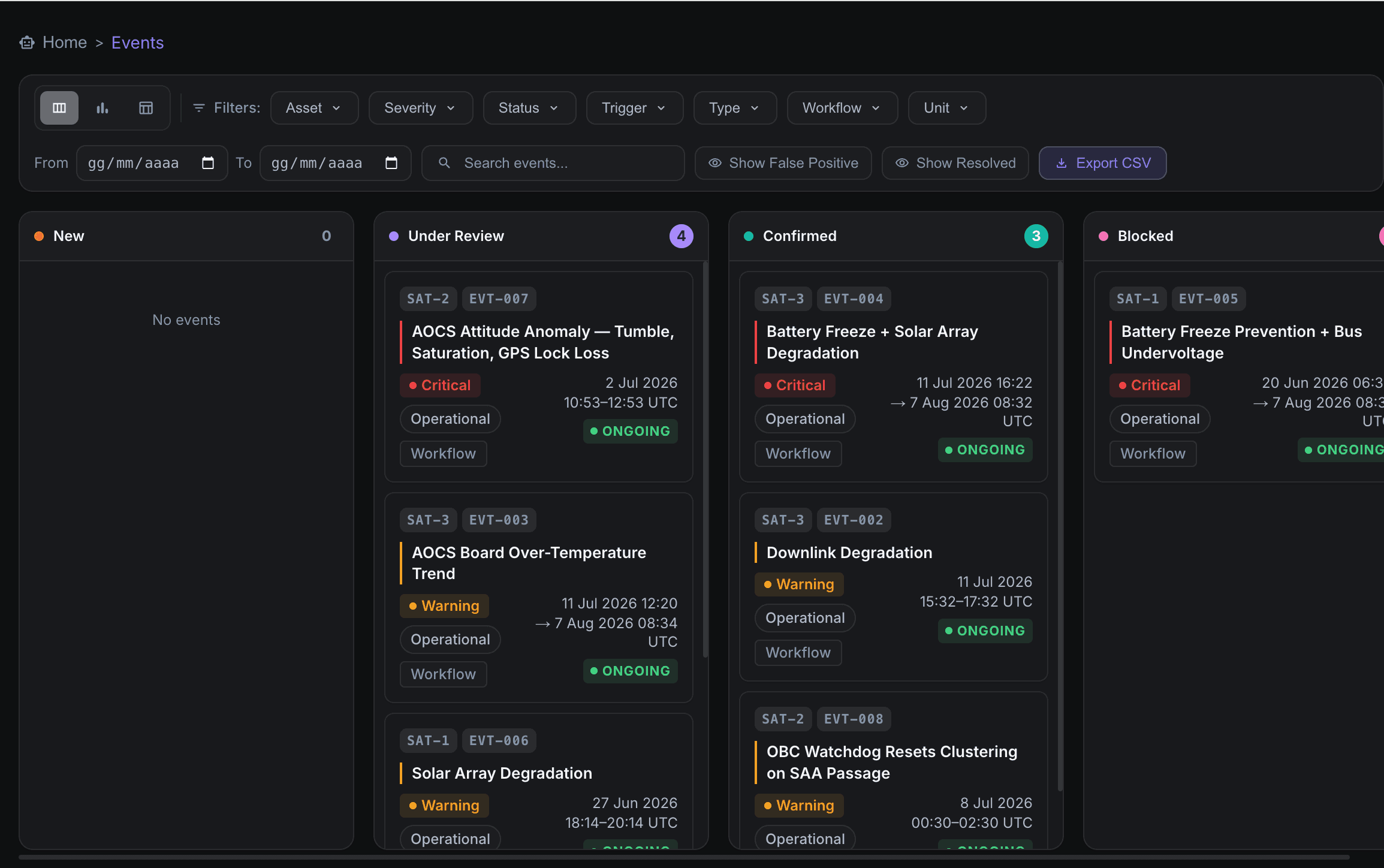
Fly more is the operations side of Mercury. Detection tells you something changed. Fly more tells you whether the fleet is still operating as intended, and what to do when it is not. Telemetry and signals become qualified events with a recommended action, so a lean team can run a growing fleet.
This is your operational case, kept live: the procedures, limits and escalation paths you wrote before launch, running on every pass instead of sitting in a document.
It runs alongside your mission control system. No re-architecture, no replacement of existing tools, no disruption to live operations.
How Fly more works
01
Ingest
Telemetry from your MCS, your satellite data model, and mission context such as operational modes, space weather and orbital data.
02
Correlate
Your rules, AI detection and the wear models of Fly longer read the same telemetry. Related signals become one thread, with similar past events and what was done about them.
03
Generate
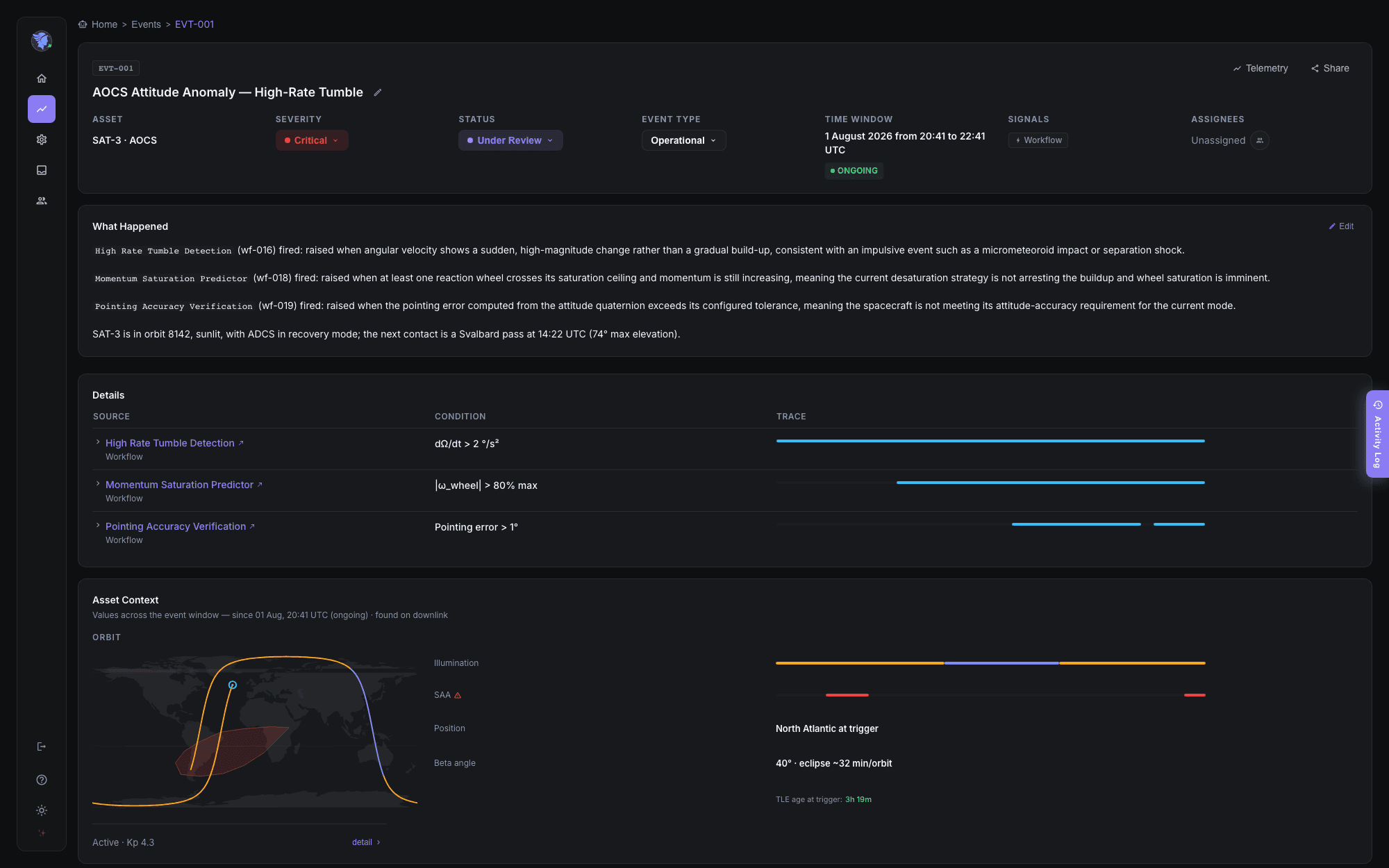
One qualified event instead of many alerts: what happened, why it matters, and the procedure to apply. Events follow your procedures. Mercury recommends and hands off. Your team decides.
04
Retain
Every event and action becomes a durable record. Handovers stop depending on who is on shift, and assurance evidence builds up as you work.
Before and after
| Before Fly more | With Fly more |
|---|---|
| Alert floods and false positives demand constant attention | Fewer, higher-confidence events reach operators |
| Investigations mean dashboard hopping and manual correlation | Each event arrives with context and a recommended action |
| Procedures live in documents, and in the heads of a few senior people | Your conops is documented and implemented at the same time: the workflow is the procedure |
What you get
Operations
- Less time in triage. Events arrive qualified, ranked and owned.
- Less time to resolve. Diagnosis, history and next steps on one page.
- Less alert noise. False positives tracked and tuned out.
Business
- More fleet capacity per operator. Operations scale as the fleet grows.
- More knowledge retention. Procedures live as versioned workflows, not in heads.
- Less reporting and audit effort. Generated automatically, traceable by design.
How Mercury fits your stack
Mercury integrates with your mission control system and runs in your cloud or on-prem environment. Telemetry in by pull or push, events out through your existing channels and a full API. SSO through your identity provider.
Two ways to use it. In the background, the engine produces events and notifications into the tools you already have. In the interface, operators investigate with full telemetry context in one place.
Most teams already have detection and alerting. The question is what happens in the twenty minutes after an alert fires. If an engineer is still opening three tools and a telemetry archive to work out whether it matters, that is the part Mercury covers. It sits on top of what you already run rather than replacing it.